















































Think about how many times you've woken up in the middle of the night and couldn't get back to sleep. Or dragged yourself out of bed in the morning with a stiff neck, a dull headache, or that familiar tightness in your shoulders that doesn't go away until noon. You blamed stress, or the mattress, or the fact that you stayed up too late.
But often, the real culprit is much simpler: the pillow.
Poor sleep rarely announces itself with one obvious cause. It builds slowly, through small discomforts that interrupt your rest without fully waking you. Your neck held at the wrong angle for hours. Your ear pressed against something that doesn't give. Your head sinking too low or propped too high. By morning, your body has been compensating all night, and you feel it.

The problem is that most people treat pillows as interchangeable. When one wears out, they pick up another, maybe slightly softer or firmer, and hope for the best. But pillow choice is not about softness. It's about what your head, neck, and spine actually need based on how you sleep.
Sleep position is the single most important factor in choosing a pillow. And once you know what to look for, the decision becomes a lot more straightforward.
Here's a breakdown of three very different pillows and who each one is genuinely built for.

If You're a Side Sleeper with Neck or Shoulder Tension
Side sleeping is the most common position, but it's also one of the most demanding on your neck. When you lie on your side, your head needs to stay at a specific height to keep your spine in line. Too low and your neck tilts down; too high and it bends the other way.
Standard pillows tend to collapse or push unevenly, which is why so many side sleepers wake up with tension in their neck and shoulders.
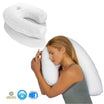
The Goodinary® U-Shape Contour Pillow addresses this with a curved, U-shaped design that actively guides your head into a better resting position. The built-in ear well means your ear sits in a natural hollow instead of being pressed against the foam, and the long tail support helps maintain consistent neck and spine alignment through the night. It works for both left and right side sleeping, so you can switch without adjusting anything.
The memory foam core is medium-firm, which means it adapts to your shape without collapsing. If you consistently wake up with neck stiffness and you're a side sleeper, this is worth trying.

If You Sleep on Your Stomach or Back and Hate Bulky Pillows
For stomach sleepers, most pillows are simply too thick. When your head is elevated too high, your neck has to angle backward, which creates strain on the cervical spine. Many stomach sleepers end up sleeping without a pillow at all, or folding it flat in a way that defeats the point.
Back sleepers have a similar issue in the opposite direction: they need some support, but not so much that their chin tucks toward their chest.
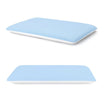
The Goodinary® Hyper Slim Pillow was designed specifically for this. At just 4 inches in height, it keeps the head close to the mattress while still providing memory foam support underneath. The ice silk cover feels cool and breathable, and the low-profile design means your head, neck, and spine can rest in a much more neutral position.
It's the kind of pillow that feels almost too flat the first night, then you realize you woke up without any neck stiffness.

If You Have a Piercing, Sensitive Ears, or Just Hate Ear Pressure
This one is very specific, but it solves a problem that standard pillows simply can't.
If you've recently had a piercing, your options at bedtime are limited: sleep on the opposite side all night, try to angle your head awkwardly, or wake up in pain. The same goes for people who wear hearing aids, have cartilage sensitivity, or just find that any prolonged pressure on their ear is uncomfortable.
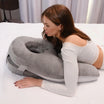
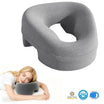
The Goodinary® Piercing Cushion Pillow has a circular 3.5-inch opening in the center that lets your ear rest completely free of contact with the pillow. The cotton cover is hypoallergenic and breathable, and the filling is adjustable through a zipper, so you can dial in the exact height and firmness that works for you. The cover is also machine washable, which matters for anyone using it during a piercing healing period.
It's a niche product, but for anyone who needs it, there's genuinely no substitute.

A Simple Way to Choose
The question isn't which pillow is best. It's which one matches how you actually sleep.
If you sleep on your side and wake up with tension in your neck or shoulders, the U-Shape Contour is designed for that alignment problem. If you prefer a low, flat surface and sleep on your stomach or back, the Hyper Slim gives you memory foam support without the unwanted height. And if ear discomfort is keeping you from resting comfortably on your side, the Piercing Cushion removes that pressure entirely.
Getting the right pillow for your position is one of the simplest changes you can make to how you sleep. It doesn't require adjusting your schedule or your routine. You just need something that works with your body instead of against it.



Leave a comment
This site is protected by hCaptcha and the hCaptcha Privacy Policy and Terms of Service apply.