




































The commute is the part of a hot day nobody plans for. You dress for the office, where the air conditioning runs cold, then spend forty minutes getting there in conditions the outfit was never meant for. By the time you sit down at your desk, you have already used up energy you needed for the morning.
It is a strange gap in how most people prepare. Considerable thought goes into the workday and into the evening, while the two stretches on either side get none, even though they are the parts spent outdoors, standing on platforms, and walking between stops in full sun.
What makes summer commuting draining is not one big thing. It is the accumulation of several small ones: heat with no airflow, more walking than you registered doing, and food or drink that turned warm somewhere between home and lunchtime.
The fix is not a lifestyle overhaul. It is three or four small items that live permanently in your bag and quietly remove those failure points. Here is what actually earns its place.

What Makes Hot Weather Commutes So Draining?
Hot commutes drain you through accumulation rather than intensity. Still air on a platform, sun exposure while walking, and unsupportive shoes over longer distances each add a small load. None of them is significant alone, but together they consume energy before your day has properly started.
The still air is the part people underestimate. Heat is far more tolerable with airflow, which is why an outdoor walk can feel better than waiting in a sheltered but airless station. Without moving air, your body's own cooling becomes much less effective.
Distance is the second hidden factor. A commute described as thirty minutes usually includes ten to fifteen minutes of actual walking, in shoes chosen to look right at work rather than to carry you comfortably across pavement.
The third is what you are carrying. Coffee that went lukewarm, a lunch that sat warm in a backpack, a drink you gave up on. Each of these is minor by itself and cumulatively they shape how the day feels.

What Is the Most Useful Item to Carry on a Hot Commute?
The single most useful item is a portable fan. Creating your own airflow addresses the exact problem that makes stationary waiting unbearable, and unlike most cooling ideas it works immediately, in any location, without needing shade, water, or somewhere to sit down.
This is why fans have become the default summer commuting item rather than a novelty. Airflow is the fastest way to feel cooler, and a fan is the only way to get it on demand.
The Goodinary® Portable Handheld Turbo Fan is built for this kind of use. It runs five adjustable wind levels through a high speed turbo motor, which matters more than it sounds: a low setting is enough while walking, and the top setting is what you want standing still on a hot platform with no breeze at all.
Size is what makes it a genuine everyday carry item. At 2 by 2 by 7 inches it slides into a bag or a jacket pocket, and the foldable ABS body means it packs down rather than catching on everything inside your bag. It runs on a rechargeable battery via USB, so it charges alongside your phone overnight and is ready the next morning.
The practical habit is to keep it in the same pocket every day. A fan buried under a laptop is a fan you will not bother reaching for during a five minute wait, which is exactly when it helps most.
Once the workday ends, the same fan handles the walk home, outdoor seating, and weekend time outside.

Why Do Your Feet Hurt More in Summer?
Feet tire faster in warm weather because you tend to walk more of the route, swelling increases in heat, and summer shoes usually offer less structure than the ones worn in cooler months. The distance has not changed, but the support underfoot has.
Most people blame the shoes and stop there, which does not help much when the shoes are required for work. The more useful change is what goes inside them.
The Goodinary® Clouds Comfort Insoles address this without replacing your footwear. They combine contoured arch support with responsive memory foam, which spreads pressure more evenly across the foot during movement rather than letting it concentrate at the heel and ball where fatigue usually starts.
They are trim to fit, so one pair works in casual, work, or athletic shoes, and they come in sizes from 35 to 46 (US 5 to 13.5). The foam is soft enough to feel different immediately while holding its structure through repeated daily wear.
The honest expectation to set is that insoles change how a long walking day ends, not how the first ten minutes feel. The difference shows up in the evening, when your feet are not aching after a commute plus a full day plus the walk home.

How Do You Keep Food and Drinks Cold on a Warm Commute?
Food and drink stay cold on a commute when they travel in an insulated container rather than loose in a bag. A backpack in summer sits close to warm air and body heat, so an insulated layer is what separates a cold drink at lunch from a warm one by mid morning.
This is the part of hot weather commuting people give up on rather than solve. A lunch brought from home that arrives warm gets replaced by something bought nearby, and the routine quietly falls apart across a summer.
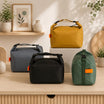
The Goodinary® Minimalist Insulated Lunch Bag fixes the specific failure. It has a secure zipper closure that holds the internal temperature and keeps the contents contained, so nothing shifts or spills into the rest of your bag on a crowded train.
It is sized for a real commute rather than a snack. The base measures roughly 10 by 6 inches with a height of 9 inches and a 15 inch top opening, which fits a lunch container, a piece of fruit, and a cold drink together in one bag. The Oxford cloth exterior has reinforced stitching where the handle meets the body, which is where bags carrying a full day of food usually fail first.
Adding a small ice pack extends the cold considerably on the hottest days. And because the bag folds flat, it does not take up space in your bag on the way home.

How Do You Actually Keep Using These Things?
The gear only works if it is with you, so store it as a fixed kit rather than deciding each morning. Keep the fan in the same pocket, leave the insoles in the shoes you commute in, and pack the lunch bag the night before. Decisions made in advance survive rushed mornings.
Most commuting kits fail on the packing, not the products. On a hot, late, rushed morning nobody is assembling anything, so the items that get used are the ones already in place.
A useful habit is to reset the kit on Sunday evening. Charge the fan, check the bag is clean, and confirm the insoles are in the right pair of shoes. Five minutes once a week is what makes the difference across a whole summer.
Small Things That Change the Whole Day
A hot commute wears you down through small, repeated frictions rather than one dramatic problem, which is exactly why small fixes work so well against it. Airflow on demand, real support underfoot, and food that arrives the way you packed it. None of it is complicated, and together they mean you arrive at work with the day still ahead of you rather than already spent.

Are handheld fans actually powerful enough to make a difference?
Yes, when the airflow is directed close to you. A multi speed option like the Goodinary® Portable Handheld Turbo Fan gives you a stronger setting for standing in still air and a gentler one while walking.
How long do portable fans last on one charge?
Battery life depends heavily on speed setting, with lower settings running considerably longer than the top setting. Charging overnight alongside your phone is the simplest way to avoid running out mid commute.
Do insoles help even if my shoes are comfortable?
Often yes, since comfort when trying shoes on is different from comfort after several kilometres of walking. Added arch support mainly affects how your feet feel at the end of a long day rather than at the start.
How do I stop my lunch getting warm on the way to work?
Use an insulated bag rather than packing food loose, and add a small ice pack in hot weather. A zippered option like the Goodinary® Minimalist Insulated Lunch Bag holds the cold better than an open tote.
What should I do if I sweat through my clothes commuting?
Build in a short buffer on arrival before you need to be anywhere, and use airflow during the walk rather than only after. Breathable fabrics and a lighter layer that comes off before you set out both help more than trying to cool down afterwards.



Leave a comment
This site is protected by hCaptcha and the hCaptcha Privacy Policy and Terms of Service apply.