


































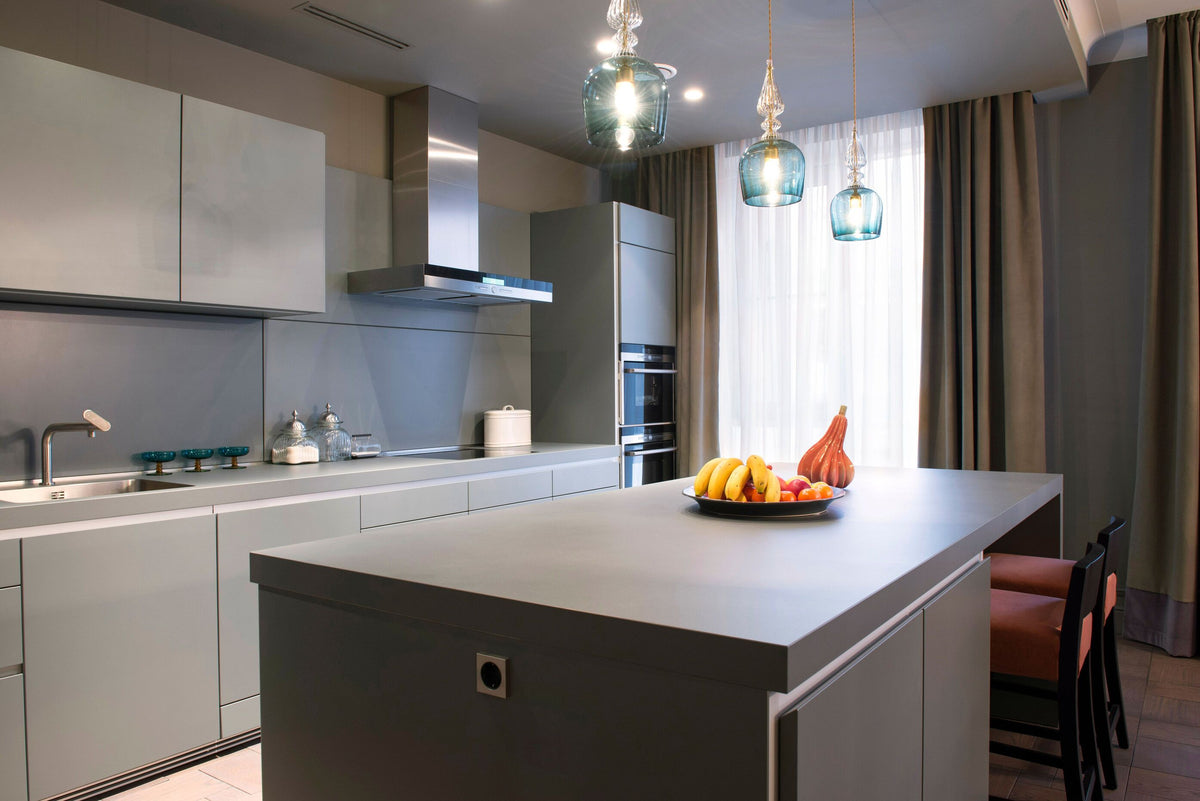
You clear the counter on Sunday. Everything gets wiped down, put away, reset. The kitchen looks like the one you imagined when you moved in. By Wednesday it is gone again, and you cannot quite say what happened.
This is the frustrating thing about counter clutter. It does not arrive in one dramatic mess. It accumulates through small, reasonable decisions: a bottle left out because you will use it tomorrow, dishes drying because the rack was full, a roll of paper towels that has simply always lived there.
Most people respond by cleaning more often. That works for a day and changes nothing structurally, because the same habits rebuild the same pile at the same rate. Cleaning is treatment. The habits are the cause.
What follows are the six habits most responsible for counters that never stay clear, and what to change about each one.

Is Your Dish Drying Area Taking Over the Counter?
Wet dishes are the single biggest counter occupier in most kitchens. Water pools around them, the area stays damp, and the space becomes unusable for anything else. Without a defined drying surface that manages the water, the drying zone quietly expands across the counter.
The usual pattern is a tea towel laid flat with dishes stacked on top. It soaks through, stays damp underneath, and the puddle spreads outward. After a few hours you have a wet patch you cannot use and dishes that are still not dry.
The Goodinary® Countertop Drain Pad replaces that arrangement with something that actually handles water. Its built in drain design channels water away through a structured surface while keeping dishes elevated, so air reaches them from underneath rather than trapping moisture against the counter.
It is made from silicone, which is flexible and heat resistant, so it doubles as counter protection for hot pans as well as a drying surface. Two sizes are available, 16 by 13 inches and 20 by 17 inches, so the drying zone can be sized to your kitchen rather than sprawling to fit whatever is on it.
The habit change is defining the boundary. Dishes dry on the pad. Anything that does not fit waits for the next round.

Should the Paper Towel Roll Live on the Counter?
A paper towel roll on the counter takes up a surprising amount of usable surface and rarely stays in one spot. It gets moved during cooking, slides behind other items, and ends up somewhere different each day, which makes the counter look unsettled even when it is otherwise clean.
The roll is also one of those items nobody consciously places. It arrives from the shop, goes on the counter, and stays there by default for years.
The Goodinary® Adhesive Paper Towel Holder moves it onto vertical space. It mounts with adhesive backing to smooth walls, cabinets, or tiles with no drilling, which makes it workable in rentals and easy to position exactly where you reach for it. Under a cabinet or beside the sink usually works best.
It is stainless steel, so it holds up to daily kitchen use, and comes in silver, gold, and black to suit different fittings. It also holds kitchen rolls or cloth towels, so the same mount works if you switch away from disposables.
The small win here is bigger than it looks. Removing one permanent object from a counter changes how the whole surface reads.

Where Should Brooms and Mops Actually Go?
Cleaning tools leaned against a wall or wedged into a corner make a kitchen look untidy no matter how clean the surfaces are. They fall over, collect dust at floor level, and occupy the exact corners where counters meet, which is where clutter tends to start.
This is the habit people defend most, usually because there is nowhere else to put them. The tools need to live somewhere, and cupboard space is already spoken for.
The Goodinary® Mop Holder Rack solves it by using wall space instead of floor space. It has multiple slots and hooks in one unit, so mops, brooms, and smaller cleaning tools are held securely in the same place rather than scattered across corners and cupboards.
Built from solid plastic and mounted to the wall, it suits kitchens, bathrooms, garages, and utility rooms. The practical advantage is that tools come off the floor entirely, which makes the floor easier to clean and stops handles sliding down against the counter edge.
Grouping the tools also means you stop losing them, which is its own quiet time saver.

Are You Keeping Rarely Used Items Within Arm's Reach?
Counters fill up when storage is organised by convenience rather than frequency. Appliances used monthly sit out alongside ones used daily, and each occupies permanent space for occasional use. The test is simple: if you have not used it this week, it does not need to be on the counter.
Most kitchens have two or three of these. A blender used for a phase that ended, a stand mixer from a baking spell, a speciality appliance from a gift. They stay out because putting them away feels like admitting you will not use them.
Move them anyway. If you reach for one twice in a month, the thirty seconds to retrieve it from a cupboard costs less than the counter space it occupied for four weeks.
Everything that stays out should earn its place through frequency, not potential.

Why Do Flat Surfaces Collect Things That Do Not Belong There?
Empty counter space invites temporary placement. Post, keys, bags, and shopping land there because the surface is available and the decision can be deferred. Since nothing about the counter says these things do not belong, the temporary pile becomes a permanent feature.
This is the least kitchen related of the habits and often the biggest contributor. The kitchen counter is frequently the first flat surface you meet on the way in, which makes it the default drop zone for an entire household.
The fix is giving those items their own destination closer to the door, even something small, so the counter stops being the path of least resistance. Every item that has somewhere else to go is one less thing competing for space you need for cooking.

Are You Cleaning the Counter Without Resetting It?
Wiping a counter is not the same as resetting it. Cleaning around objects leaves everything exactly where it was, so the surface is clean but still full. A reset means every item either returns to its storage place or is deliberately chosen to stay out.
This distinction explains why kitchens can be genuinely clean and still look cluttered. The surfaces are hygienic. The objects never moved.
Build the reset into one moment rather than a separate task. After dinner, before the wipe down, clear the counter completely, then put back only what genuinely lives there. It takes an extra minute or two and it is what makes the clean surface actually look clear.
Done consistently, this is also how you notice items that have quietly taken up residence without you deciding they should.
Clear Counters Are a System, Not a Cleaning Session
A counter that stays clear is not the result of cleaning harder. It comes from every regular item having a place that is not the counter: water going somewhere that drains, paper towels on the wall, cleaning tools off the floor, and infrequent items in cupboards. Set those up once, add a nightly reset, and the surface stops rebuilding itself between cleans.

How do I keep my kitchen counter clear in a small kitchen?
Prioritise vertical and wall space over surface space. Mounted holders, like the Goodinary® Adhesive Paper Towel Holder, move everyday items off the counter without needing cupboard room you do not have.
What is the best way to dry dishes without a big drying rack?
Use a drying surface that manages water rather than absorbing it. A Goodinary® Countertop Drain Pad keeps dishes elevated and channels water away, which takes far less space than a full rack.
How many appliances should be left out on the counter?
Only the ones you use several times a week, typically two or three. Anything used monthly or less costs more in permanent counter space than it saves in retrieval time.
Where should I store cleaning supplies in a small kitchen?
On the wall wherever possible. Wall mounted storage keeps brooms and mops off the floor and out of corners, which makes both the floor and the surrounding surfaces easier to keep clean.
How often should I reset my kitchen counter?
Once daily, ideally after the last meal. A full reset takes a couple of minutes when done nightly, whereas a weekly reset becomes a much longer job because more has accumulated.



Leave a comment
This site is protected by hCaptcha and the hCaptcha Privacy Policy and Terms of Service apply.