
























Baby-proofing has a reputation problem. Most people picture bright plastic corner guards, foam padding taped to every hard edge, and cabinet locks that look like they belong on a construction site. The result is a home that's technically safer but feels like it has been disassembled and replaced with something temporary.
The frustration is understandable. You spent time making your home look and feel like yours, and then you're told that keeping a child safe means covering it all up with products that were clearly designed without aesthetics in mind.
But that trade-off isn't actually necessary. Most of the serious safety risks in a home with young children can be addressed with products that are low-profile, color-matched, or visually neutral. The key is knowing which risks actually matter and choosing solutions that handle them without announcing themselves.
Here is how to do it properly.

What Does Baby-Proofing Your Home Actually Mean?
Baby-proofing means reducing the risk of injury or access to hazards in spaces where a young child moves freely. It covers physical hazards like furniture edges and unstable surfaces, access hazards like unlocked appliances and cabinets, and environmental hazards like loose items a child could pull down. Effective baby-proofing is targeted rather than total — it focuses on the specific risks relevant to your home layout and your child's developmental stage.
What Are the Most Important Things to Baby-Proof First?
Start with the areas your child can access most easily and that present the highest risk. These are typically the floor level, where young children spend most of their time, and storage areas at reachable height, like refrigerators, lower cabinets, and drawers. Furniture that moves across hard floors is also a consistent hazard that is easy to overlook.

How Do You Protect Floors and Furniture Without Ugly Pads?
One of the most overlooked baby-proofing steps is stabilizing furniture. When children are learning to walk or playing actively on hard floors, chairs and table legs that slide freely are a genuine hazard. A child who grabs a chair for support and finds it moving unexpectedly can fall. At the same time, chairs being dragged and pushed by children damage hardwood and tile floors quickly.
Standard felt pads address the floor issue but tend to compress, peel, and leave residue over time. A more durable and visually cleaner solution is knitted furniture covers.
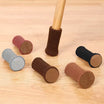
The Goodinary® Chair Leg Socks (16 Pcs) fit snugly over chair and table legs with a stretchable knitted fabric. The double-thickness padding reduces the friction that causes floor scratching, and the same padding slows down unintended sliding without stopping movement completely. At 2.8" height and 1.4" diameter, they fit most standard furniture legs. They come in six colors including light grey, white, black, light brown, grey, and coffee brown, so it is straightforward to match them to your existing furniture rather than having them stand out. Sixteen pieces covers a full table and chair set or several furniture pieces across a living area.
They look like a considered detail rather than a safety product.

How Do You Lock a Fridge or Cabinet Without Installing Permanent Hardware?
Refrigerators and lower kitchen cabinets are two of the most common access points that parents need to restrict. Standard refrigerators open easily for young children, and unsupervised access to food, drinks, or stored items creates consistent problems. At the same time, most parents do not want to drill into their appliances or install visible hardware that changes the look of the kitchen.
The Goodinary® Combination Fridge Lock installs with adhesive stickers rather than screws, so there is no drilling and no surface damage. The 4-digit combination is fully resettable, so you can change the code as needed. The cable measures 8" (20.5cm), which gives enough reach to wrap around most refrigerator handles and secure them without the lock sitting awkwardly. The body is made from ABS, stainless steel, and zinc alloy, which holds up to repeated daily use, and it comes in black or white to match standard appliance finishes.
It also works on drawers, cabinets, windows, and freezers, so one product can cover multiple access points in the kitchen or elsewhere in the home using the same code.

How Do You Create a Play Area That Keeps Toys Contained?
One of the less obvious baby-proofing strategies is defining where play happens. When a child has a clearly defined play surface, toys tend to stay in that area rather than spreading across the room. This reduces the hazard of toys left on hard floors in walkways, which is a fall risk for adults and children alike.
A play mat with a visual pattern serves as a natural anchor. Children understand it as their space and tend to gravitate toward it. It also makes clean-up concrete: toys go back onto the mat, which gives both children and parents a clear definition of what "tidied up" means.
The Goodinary® Parking Lot Play Mat Rug uses a parking lot design that actively invites imaginative play with toy cars and other props. The crystal velvet and polyester surface is soft for sitting and crawling, and the anti-slip backing keeps the mat stable on hard floors during active play. It comes in three sizes (31x63", 39x79", and 55x79") and three patterns including City Traffic, Town Road, and Numbers Road, so it can be sized to a corner of a living room or scaled to fill a dedicated play area. The design looks considered rather than purely functional, which matters in a shared family space.

What Are the Biggest Baby-Proofing Mistakes People Make?
Covering Everything Instead of Addressing Real Risks
The most common mistake is buying a large baby-proofing kit and applying every product regardless of whether it addresses a real risk in your specific home. Corner guards on a coffee table you do not have, cabinet locks on upper cabinets a toddler cannot reach, and door pinch guards on doors that are never left open all add visual clutter without meaningfully improving safety. Focus on what your child can actually access and what poses a genuine hazard.
Choosing Products That Require Permanent Modification
Drilling into walls, cabinets, or appliances for safety hardware is sometimes necessary, but it should be the last resort rather than the default. Adhesive-based solutions have improved significantly and handle most everyday baby-proofing needs without leaving permanent marks. This matters both for the appearance of the home and for situations where you rent rather than own.
Ignoring Floor-Level Furniture Hazards
Furniture legs on hard floors are consistently underestimated as a safety risk. Parents often focus on sharp edges at child height while overlooking the hazard of furniture that moves unexpectedly when a child grabs it for support. Stabilizing the furniture is one of the most practical and least visible steps in the process.
Not Defining a Play Space
When toys are distributed throughout a home without a defined play area, they create ongoing hazards. Items left on hard floors are trip and fall risks. Small pieces in unexpected places are a concern for younger children. A mat or defined play surface is one of the simplest ways to keep the environment safer without restricting where the child can be.
Choosing Safety Products That Look Temporary
Products that are brightly colored, visibly mismatched, or clearly placeholder items affect how a space feels to live in. Over time, parents remove them because they dislike the way the home looks, which defeats the purpose. Choosing products that match the home's existing palette or that look like deliberate additions makes them more likely to stay in place.
Forgetting to Revisit as the Child Develops
Baby-proofing that worked well for a six-month-old is often inadequate for an eighteen-month-old. Children's ability to climb, open, and reach changes quickly. A fridge lock that a toddler cannot crack, a play mat sized for the current play area, and furniture protection that holds up to active movement all need to be reconsidered as the child grows.

Frequently Asked Questions
How early should you start baby-proofing your home?
Most safety experts recommend starting before the child becomes mobile, which typically happens around six to nine months. Setting up safety measures before they are urgently needed is much easier than scrambling once a child is already crawling and pulling to stand.
Can you baby-proof a rented home without losing your deposit?
Yes. Adhesive-based solutions like the Goodinary® Combination Fridge Lock install without drilling and remove cleanly from most surfaces. Slip-on furniture covers like chair leg socks require no installation at all. These approaches handle the majority of common baby-proofing needs without permanent modification.
Do chair leg covers actually prevent falls?
They help reduce one specific type of fall risk: furniture that slides unexpectedly when a child grabs it for support. They do not prevent all falls, but stabilizing the furniture around a play area removes a hazard that is easy to overlook and straightforward to fix.
What is the safest way to set up a play area in a living room?
Use a mat to anchor the play zone in a corner or defined area, keep toys contained within that footprint, and ensure that furniture adjacent to the play area is stable on the floor. These three steps address the most common hazards in a shared living and play space.
How do you get a toddler to understand where the play area is?
Consistent visual cues work best. A mat with a distinct pattern like the Goodinary® Parking Lot Play Mat Rug gives children a clear physical reference for where their space is. Reinforcing the boundary during play and clean-up consistently tends to make it stick over time.

Leave a comment
This site is protected by hCaptcha and the hCaptcha Privacy Policy and Terms of Service apply.