





















































There is a difference between a bedroom that works and a bedroom you want to be in. Most bedrooms work. There is a bed, somewhere to put clothes, a lamp, curtains. Everything functions. And still the room feels like a place you pass through on the way to being unconscious, rather than somewhere you go to stop.
The usual assumption is that the difference costs money. New bedding, a better frame, a proper wardrobe, paint. So the room stays as it is, functional and unremarkable, while the upgrade sits on a list.
What actually separates the two is smaller than that, and it has very little to do with furniture. Rooms that feel restful share four qualities: the bed feels enclosed rather than exposed, the light is low and comes from low down, the surfaces are soft rather than hard, and nothing in the room is reminding you of something unfinished.
Every one of those can be changed without replacing anything you own. Here are seven changes that do it, in rough order of how much difference they make.

What Makes a Bedroom Feel Like a Retreat Instead of a Room?
A bedroom feels restful when the bed is enclosed, the lighting sits below eye level, textures are soft, and nothing visible belongs to your working life. Those four qualities matter far more than furniture quality, which is why an expensive bedroom can still feel cold and a simple one can feel like somewhere to hide.
Enclosure is the one people never think of and feel most strongly. A bed in the middle of an open room leaves you exposed on every side, and some part of your attention stays aware of that. The same bed with something overhead or around it reads as a defined space, and the room gets smaller in a way that feels protective rather than cramped.
The rest follow from it. Low warm light instead of a ceiling fixture. Fabric and texture instead of flat painted surfaces. And no laptop, no laundry pile, no stack of post waiting to be dealt with, because a room cannot feel restful while it is also a to-do list.
Work through these in order and the room changes character well before you have spent anything significant.
1. How Do You Make a Bed Feel Enclosed Without Rebuilding It?
A canopy hung above the bed creates enclosure without touching the bed itself. Fabric overhead changes how the space reads from open to defined, giving the bed a boundary of its own. It is the single change that most reliably makes an ordinary bedroom feel like a retreat.
This is the one to do first, because it changes the whole room rather than a detail in it. A four poster frame achieves the same thing and requires replacing your bed. A hung canopy achieves it from the ceiling.
The Goodinary® Hanging Mosquito Net is built for exactly this. It is a large dome canopy with a ceiling hanging mechanism, so it suspends above the bed rather than attaching to the frame, and it works as a decorative hanging bed canopy as much as a net. That dual purpose is what makes it worth doing in any season rather than only in summer.
Sizing is by bed rather than by room, with options for beds under 59 inches (under 1.5m), 59 to 71 inches (1.5 to 1.8m), and 71 to 79 inches (1.8 to 2m), covering twin through to king. It comes in white, black, blue, and pink, which matters more than it sounds: white reads soft and almost invisible, black reads deliberate and architectural, and the choice changes whether the room looks romantic or modern.
The fabric is a lightweight fine mesh, which is the detail that keeps it from feeling heavy or stuffy. Mesh lets air move through while still reading visually as a wall of fabric, so the bed gains a boundary without the enclosed feeling becoming airless. A solid fabric canopy does the opposite and most people take it down within a month.
The practical function sits underneath the aesthetic one. Flying insects disturb sleep in warm weather and whenever windows are open at night, and a canopy around the bed means you can leave a window open without that trade-off. The same canopy packs down for camping, outdoor trips, and travel, which is where a lot of people discover they sleep better inside one.
Two notes on hanging it. Centre the hanging point over the middle of the bed rather than over the headboard, so the dome falls evenly and does not pull to one side. And hang it high enough that the mesh clears your head when you sit up in bed, since the most common complaint with any canopy is having to duck under it.

2. Why Does Overhead Lighting Ruin the Feeling of a Bedroom?
A ceiling light puts bright, even illumination across the whole room from above, which is how an office is lit and the opposite of how a restful room is lit. Light from below eye level, from lamps rather than the ceiling, makes the same room read as somewhere to settle rather than somewhere to work.
This costs nothing and takes one evening. Turn the ceiling light off and leave it off. If the room has no lamps, a single one on a bedside table is enough to start.
The direction matters as much as the brightness. Light coming downward from overhead flattens everything and casts shadows on faces. Light coming from low and to the side gives the room depth and the shadows fall where you are not looking.
Warmth matters too. A warm bulb in a cheap lamp does more for a bedroom than a cool bulb in an expensive one. If the room only has a ceiling fixture and you cannot add lamps yet, changing that bulb to the warmest one available is the cheapest useful change in this entire list.
Changing the light is also the easiest opening move for an evening routine, which is covered in more depth in how to build a wind down routine you actually keep.
3. How Do You Soften a Window That Feels Like a Hard Edge?
A bare or thinly covered window is a hard, cold edge in a room meant to feel soft, and at night it becomes a black rectangle that the eye keeps returning to. A dense fabric panel across it both softens that edge visually and stops outside light reaching the bed.
Windows are usually the last thing people address and one of the most visible. A room with good bedding and a thin, light leaking blind still reads as unfinished.
The Goodinary® Self Adhesive Portable Blackout Curtains solve this without hardware. They install with adhesive hook and loop strips on a clean, dry window frame, so there are no rods, no screws, and no drilling, which makes them workable in a rental or a room you do not want to alter. The fabric is a dense, tightly woven three layer polyester that blocks sunlight and UV.
Sizes run from 27 by 47 inches up to 59 by 79 inches, with six options in between, and the panels come in beige, pink, grey, and blue. For a bedroom, beige and grey tend to disappear into the room while the stronger colours become a feature, so pick based on whether you want the window to recede or to be part of the scheme.
Sizing is the detail that decides whether this works. Choose a panel wider than the window so the fabric overlaps the frame, since the edges are where light gets in. A 59 inch panel on a 53 inch window gives the overlap you want. The panels are also trim to size and machine washable, and because they come down as easily as they go up, they travel.
Beyond the darkness, the dense fabric adds privacy and softens some outside noise, though it is not soundproof. On a sunny window it also reduces direct sunlight and UV coming into the room, which keeps a bedroom cooler through the afternoon.
In colder months the window works the other way around, since glass is the thinnest part of any external wall and the point where a room feels coldest. That side of it is covered in why your home still feels cold with the heating on.

4. Why Does Clutter in a Bedroom Feel Different From Clutter Elsewhere?
Clutter in a bedroom reads as unfinished business rather than untidiness, because the things that accumulate there are mostly tasks: laundry waiting to be dealt with, post waiting to be opened, a bag not yet unpacked. A room full of pending tasks cannot feel restful however well it is decorated.
This is why a tidy bedroom feels disproportionately better than a tidy spare room. You are not responding to the visual order. You are responding to the absence of reminders.
The fix is categorical rather than cosmetic. Work out which pending tasks are living in the room, then move each category somewhere else entirely rather than tidying it into a neater pile in the same place. Laundry belongs wherever the machine is. Post belongs wherever you deal with post.
The test is whether anything in your eyeline from the bed is something you have to do. If the answer is yes, that thing is what is keeping the room from feeling finished, not the paint colour.
The same principle applies elsewhere in a home, where giving each category of small object one fixed place does more than tidying repeatedly. There is more on that in 8 small upgrades that make a living room feel finished.
5. What Should the Last Thing You Do in a Bedroom Be?
The final action should close off visual input and require no further decisions. Once you are lying down, anything involving adjusting or checking pulls you back toward alertness. A single movement that ends the day, with nothing to fasten or set, is what completes a restful room.
The Goodinary® Weighted Sleep Mask fits that moment because there is nothing to operate. It is strap free with no Velcro, so it rests over the eyes rather than fastening around the head, and its four pod construction spreads gentle weight across the eye area rather than clamping. One side is 100% cotton and the other a soft plush, with a BPA free PE bead fill, and it comes in six colours.
It is also freezer friendly, so a short chill before use gives a cooling sensation on warm nights. Because it has no strap, it can shift during the night, which is the trade off for having nothing pressing against the back of your head.

6. Why Does Texture Matter More Than Colour in a Bedroom?
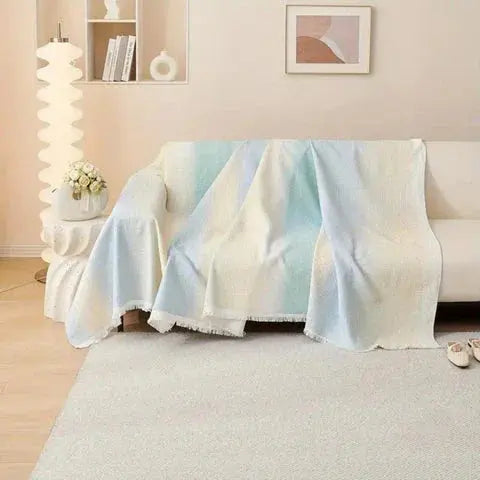
Texture is what makes a room feel soft, and softness is most of what people mean by restful. A room with several different fabric textures reads as layered and comfortable, while a room of flat painted walls and one smooth duvet reads as bare regardless of how good the colour is.
This is the change that makes the biggest difference per unit of effort, because it needs no purchase at all if you already own blankets. Layer what you have: a throw folded across the end of the bed, a second pillow in a different fabric, a rug even if the floor is carpeted.
The principle is contrast between materials rather than quantity. Linen beside wool beside cotton gives a room depth. Three cotton items of slightly different shades give it nothing, which is why a carefully colour matched bedroom can still feel flat.
Hard surfaces are worth noticing for the same reason. A bare bedside table, a mirror, a window and a painted wall are all reflective and smooth, and a room where those dominate feels cooler than its temperature.
7. What Should You Keep Out of a Bedroom Entirely?
Work belongs out of the bedroom, along with exercise equipment and anything else that asks something of you. A room used for several purposes cannot signal any of them clearly, and a bedroom that doubles as an office keeps prompting the part of your brain you are trying to switch off.
This is the hardest change on the list and often the most effective, particularly for anyone who works from home. If the laptop lives on the bedside table, the room is partly an office all night.
Where space genuinely does not allow a separate room, the workable version is putting work out of sight rather than out of the room. A laptop in a drawer or a bag by the door is different from a laptop open on a desk you can see from the pillow. The goal is that nothing in view belongs to the working day.
The same applies to exercise gear, half finished projects, and anything stored in the room because there was nowhere else for it. A bedroom holding four purposes feels like storage with a bed in it.
Rest Is Mostly About What You Remove
A bedroom that feels like a retreat is rarely the result of buying better furniture. It comes from enclosing the bed, dropping the light below eye level, softening the hard edges, and taking out everything that belongs to the rest of your life. Most of that costs nothing and the rest costs very little. Hang something over the bed, switch off the ceiling light, cover the window properly, and move the laptop out, and you will have a different room by the end of the weekend without having redecorated anything.

Do bed canopies make a room feel smaller?
They make the bed feel more defined rather than making the room feel cramped, particularly in a fine mesh like the Goodinary® Hanging Mosquito Net, where you can see through the fabric. Solid fabric canopies are the ones that close a room in.
How do you hang a bed canopy from the ceiling?
Position the hanging point over the centre of the bed rather than above the headboard, so the dome hangs evenly, and set the height so the mesh clears your head when sitting up. Ceiling type determines what fixing you need, so check what your ceiling is before mounting anything.
Can you make a bedroom darker without permanent curtains?
Yes. Adhesive mounted panels such as the Goodinary® Self Adhesive Portable Blackout Curtains attach to the window frame with hook and loop strips and come down cleanly, so they work in rentals and can move with you.
What is the cheapest change that makes a bedroom feel better?
Switching off the overhead light and using a lamp instead, with the warmest bulb available. It costs almost nothing and changes how the entire room reads in the evening more than any single purchase.
Is it bad to have a desk in the bedroom?
It makes the room harder to associate with rest, because the desk keeps prompting work. Where a separate room is not possible, keeping the laptop and work items out of sight from the bed gets most of the benefit.



Leave a comment
This site is protected by hCaptcha and the hCaptcha Privacy Policy and Terms of Service apply.