















































You wake up at three in the morning to a high thin whine next to your ear. You swat at nothing, lie still, listen. Silence. You start to drift off and it comes back. By the time the room is light you have two new bites on your ankle, one on your shoulder, and roughly four hours of broken sleep behind you.
The next evening you do the obvious things. Spray something on your arms. Close the window even though the room is too warm for that. Maybe plug something in. And somewhere between two and five in the morning the whine comes back anyway.
The reason this cycle repeats is that almost everything sold for the problem is a deterrent, and a deterrent has to keep working for eight hours while you are unconscious and unable to reapply, re-aim, or notice that it has stopped working. Very few of them do.
A barrier is a different proposition. It does not need to keep convincing an insect to stay away. It just needs to be in the way. Here is how the problem actually works and what reliably ends it.

Why Do Mosquitoes Find You When You Are Asleep?
A sleeping person is the easiest target in a house. You exhale carbon dioxide in a steady plume, your body gives off heat and moisture, and you do not move for hours at a time. Those are the exact cues biting insects follow, and sleep removes the only defence you normally have, which is noticing.
This is why the problem concentrates at night rather than during the evening. In the evening you are moving, swatting, changing rooms. In bed you become a stationary, warm, continuously signalling target lying in one place for the whole night.
It also explains why bites cluster on whatever is uncovered. Ankles sticking out from under a duvet, a shoulder above the sheet, a face. The insect does not have to search, it only has to reach exposed skin, and a sleeping body helpfully holds still while it does.
And it explains the timing. Many biting species are most active around dawn and dusk, which is why the worst of it tends to land in the hours just before you wake, when you are in lighter sleep and most likely to be pulled out of it entirely.
Why Does Repellent Not Solve the Problem Overnight?
Repellents are deterrents, which means they have to keep working continuously for the whole night. Applied skin products fade over hours, rub off against bedding, and cannot be reapplied while you are asleep. Anything you can only put on before bed is covering the shortest part of the night.
This is the gap people keep falling into. The spray works for the first stretch of the evening, which is when you are awake and would have noticed an insect anyway, and has thinned out by the hours when you are deeply asleep and cannot respond.
Bedding makes it worse rather than better. Skin applied products transfer onto sheets through the night, so coverage drops fastest exactly where your body is in contact with the bed, and those are often the areas that end up bitten.
There is also the simple matter of whether you want to go to sleep covered in something. Plenty of people stop using repellent indoors not because it failed but because sleeping in it is unpleasant, and a solution you abandon after a week is not a solution.
The underlying issue is strategic rather than about any particular product. Deterrence asks something to work continuously while you are unable to supervise it. A physical barrier asks nothing. It is either in place or it is not, and you can see which at a glance before you get into bed.

What Is the Most Reliable Way to Stop Being Bitten in Bed?
A net around the bed is the most reliable approach because it does not depend on anything staying active. It puts a physical barrier between you and any flying insect in the room, works for the full night without reapplication, and keeps working whether or not you remembered to do anything else that evening.
This is why nets remain the standard answer in places where biting insects are a nightly fact rather than an occasional nuisance. The logic has not changed and nothing has replaced it.
The Goodinary® Hanging Mosquito Net is a large dome canopy that suspends from above with a ceiling hanging mechanism, so the barrier surrounds the bed rather than attaching to the frame. That matters practically: it works over a bed with no posts, no headboard, and no fixing points of its own, which is most beds.
The fabric is a lightweight fine mesh, and that specification is the one to care about. Mesh blocks mosquitoes and other flying insects while still letting air move through, which is the difference between a barrier you keep and one you take down in week two. A solid fabric canopy stops insects and also stops airflow, and in the warm weather when you actually need it, an airless bed is unbearable.
Sizing goes by bed rather than by room, with options for beds under 59 inches (under 1.5m), 59 to 71 inches (1.5 to 1.8m), and 71 to 79 inches (1.8 to 2m), so twin through to king is covered. It comes in white, black, blue, and pink.
Two things decide whether a net actually works on a given night, and both are about habit rather than product. Make sure the mesh reaches the floor or tucks under the mattress all the way round, because a gap at the bottom is an open door and the most common reason people conclude a net failed. And close it fully before you get in rather than after you have lain down, since an insect that was already inside the canopy has now been sealed in with you.
Hang the suspension point over the centre of the bed rather than above the headboard, so the dome falls evenly instead of pulling to one side and leaving one edge short. Set the height so the mesh clears your head when you sit up, or you will resent it.
The same canopy goes camping, on outdoor trips, and travelling, which is often where people first discover how much better they sleep inside one. It also doubles as a decorative hanging bed canopy, so it does not have to look like equipment in a bedroom you otherwise like. That side of it, and what enclosure does to how a room feels, is covered in 7 changes that make a bedroom feel like a retreat.

How Do Insects Get Into a Bedroom in the First Place?
Flying insects get in through open windows, gaps around window and door frames, and doors left open at dusk when many species are most active. Warm nights make this worse because that is exactly when people open windows for airflow, which is the single largest opening in most bedrooms.
The open window is the obvious one and the hardest to give up, because in warm weather the alternative is a room you cannot sleep in for a different reason. That trade off is the real problem, and it is why the barrier around the bed matters more than trying to seal the room.
Frame gaps are the ones nobody checks. A window that closes properly can still have a few millimetres of space around the seam, and so can a door. Those gaps are also where draughts come from in colder months, and the same fix covers both, which is worked through in why your home still feels cold with the heating on.
Doors are worth a separate thought. Dusk is both when people come and go most and when biting activity tends to peak, so an external door standing open for a few minutes in the evening lets in more than a window does over several hours.
Light is the last factor. A lit room at night is visible from outside and draws flying insects toward the opening, so keeping a bedroom dark while the window is open changes how much comes in.

Can You Keep a Bedroom Cool Without Leaving the Window Open?
Partly, yes, and it starts during the day rather than at night. Most of the heat in a warm bedroom arrives through the window as direct sunlight, so blocking the sun while you are out means the room is cooler when you return, and you need the window open less overnight.
This is the change that attacks the trade off directly. If the room never gets as hot in the first place, the open window stops being compulsory, and the main route for insects narrows on its own.
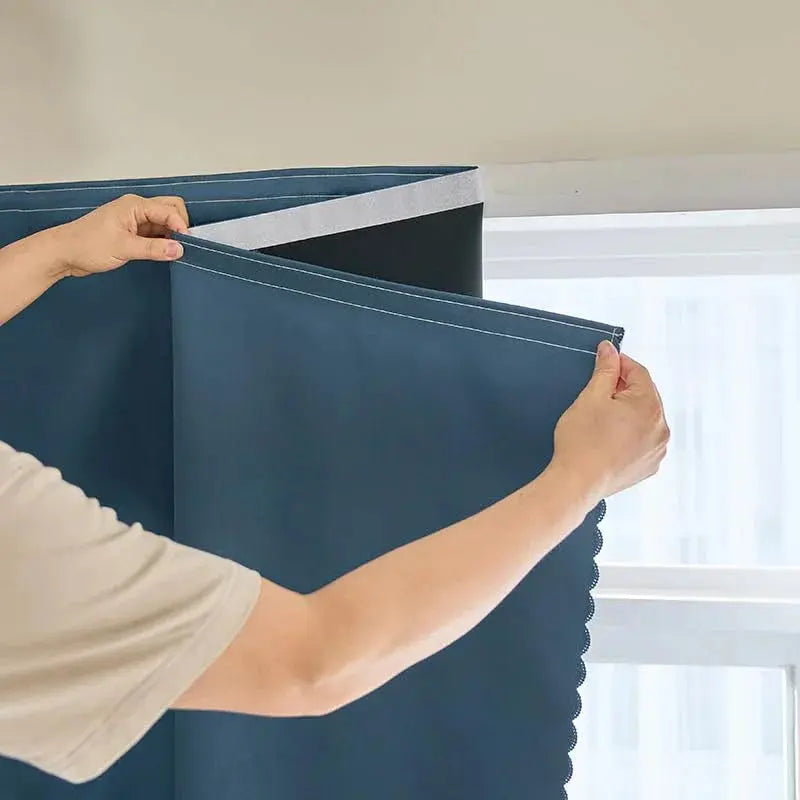
The Goodinary® Self Adhesive Portable Blackout Curtains do this without any hardware. They fit with adhesive hook and loop strips on a clean, dry window frame, so there are no rods, screws, or drilling, which makes them workable in a rental. The fabric is a dense, tightly woven three layer polyester that blocks sunlight and UV, which is what reduces how much heat the room takes on through the afternoon.
Sizes run from 27 by 47 inches up to 59 by 79 inches across six options, in beige, pink, grey, and blue. Choose a panel wider than the window so the fabric overlaps the frame, since the edges are where both light and heat get past. A 59 inch panel suits a 53 inch window.
The panels are trim to size and machine washable, and because they come down as easily as they go up they can travel, which is useful if the rooms you sleep in while away are the ones with no coverings at all.
The darkness does a second job here. A dark room is less visible from outside than a lit one, so on nights when the window does need to be open, the room is drawing less toward it.

What Should You Do About Standing Water Around Your Home?
Standing water is where mosquitoes breed, and most of it in a typical home is in containers nobody thinks of: plant saucers, buckets, blocked gutters, watering cans, pet bowls, and anything outside holding rainwater. Emptying them weekly reduces how many are around the house to begin with.
This is the highest value thing in this entire article and it costs nothing. Everything else in the list manages insects that already exist. This reduces how many there are.
The container list is longer than people expect. Saucers under potted plants are the classic one, because they refill every time you water. Gutters that are not draining hold water along their whole length. Then the overlooked ones: an upturned bin lid, a wheelbarrow, a tarpaulin with a dip in it, a child's toy left in the garden, the tray under an outdoor tap.
A weekly pass is enough. Tip anything holding water, scrub plant saucers rather than only emptying them, and keep buckets and cans stored upside down so they cannot collect rain between uses. If you share a building, the communal areas and shared balconies matter as much as your own, since insects do not respect the boundary.
Water you cannot remove, such as a pond or a water butt, is a different matter and worth dealing with on its own terms rather than ignoring because it cannot be tipped out.
How Do You Stay Asleep Through Dawn?
Dawn is both when biting activity often peaks and when light starts entering the room, so it is the point where most people get pulled out of sleep and stay awake. Blocking light at that moment removes one of the two things waking you, which makes the last stretch of the night far easier to sleep through.
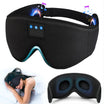
The Goodinary® Weighted Sleep Mask is suited to that because there is nothing to operate. It is strap free with no Velcro, so it rests over the eyes rather than fastening around the head, and its four pod construction spreads gentle weight evenly rather than clamping. One side is 100% cotton and the other a soft plush, with a BPA free PE bead fill, and it comes in six colours.
It can also be chilled in the freezer before use, which some people prefer on warm nights. Because it has no strap it can shift during the night, which is the trade off for having nothing pressing against the back of your head.
Barriers Beat Deterrents
Being bitten at night is not a problem of not trying hard enough. It is a problem of asking a deterrent to do eight hours of unsupervised work while you are unconscious. Put a fine mesh barrier around the bed, close it properly before you get in, keep the room cool enough that the window does not have to stay wide open, and empty the standing water around the house once a week. None of that needs reapplying at two in the morning, which is the whole point.

Do mosquito nets actually work?
They work as long as there are no gaps. A dome canopy like the Goodinary® Hanging Mosquito Net needs the mesh reaching the floor or tucked under the mattress all the way round, and it needs closing before you get into bed rather than after.
Does a mosquito net make it too hot to sleep?
Not in a fine mesh, which lets air move through while still blocking flying insects. Solid fabric canopies are the ones that trap heat, which is why mesh is the specification that matters for anywhere warm.
How do I stop mosquitoes coming in through an open window?
You mostly cannot, which is why the barrier belongs around the bed rather than at the window. Keeping the room dark while the window is open helps, as does reducing how hot the room gets during the day so the window does not need to be open as wide.
Why do I only get bitten at night?
A sleeping body gives off a steady plume of carbon dioxide, heat and moisture, and it stays still for hours. Many biting species are also most active around dawn and dusk, which is when you are least able to react.
Will blackout curtains help with insects?
Indirectly. Blocking sunlight keeps a bedroom cooler through the day, so the window needs to be open less at night, and a dark room is less visible from outside. Panels such as the Goodinary® Self Adhesive Portable Blackout Curtains fit without drilling, so they work in rentals.


Leave a comment
This site is protected by hCaptcha and the hCaptcha Privacy Policy and Terms of Service apply.